



Blog
Valve Selection for Desalination Projects in Bahrain
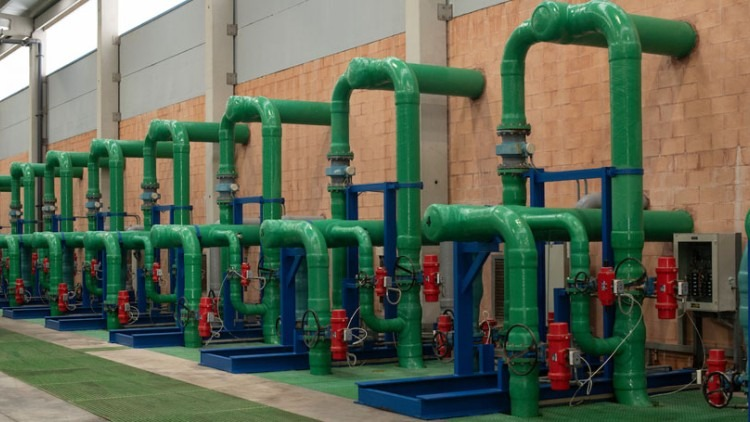
Valve selection for desalination projects in Bahrain carries more weight than most procurement decisions. Bahrain has virtually no natural freshwater, so desalination is not a backup, it is the only supply chain. That makes seawater desalination valves a critical infrastructure component, not a commodity purchase. Middle East Valve is a seawater valve manufacturer that supplies industrial valves for desalination plants across Bahrain, working directly with EPC contractors and plant operators from the specification stage through to delivery. The volume of desalination plant valves Bahrain projects require has increased steadily, and a wrong call on valve type or material at any stage means downtime, contamination risk, or premature failure.
Why Valve Selection Matters in Desalination Projects :
Desalination system valve types vary considerably depending on where they sit in the process. No two points in a desalination system have the same service conditions, which is why a single valve specification never covers the whole plant:
- Valves used in RO desalination plants operate under high differential pressure with constant cycling – any weakness in the seat or body material shows up fast.
- Valves for seawater intake systems are in continuous contact with marine organisms, silt, and chlorinated water, which rules out most standard alloy grades.
- Valves for brine discharge systems see the most aggressive fluid in the plant — concentrated saline that eats through inadequate materials within months.
- Valves for filtration and pre-treatment deal with chemical dosing and suspended solids; soft seating and inferior coatings do not last in this service.
Types of Valves Used in Desalination Projects :
The main types are butterfly, ball, gate, check, and control valves. Which valves are used in desalination projects at any given point comes down to the process stage, the pressure class, and what the fluid actually contains.
What valves are used in desalination plants varies by where you are in the system. Intake lines need different valves from RO skids, and RO skids need different valves from brine discharge. Butterfly valves, ball valves, gate valves, check valves, and control valves each have a defined role, and substituting one for another without considering the service conditions is where failures start.
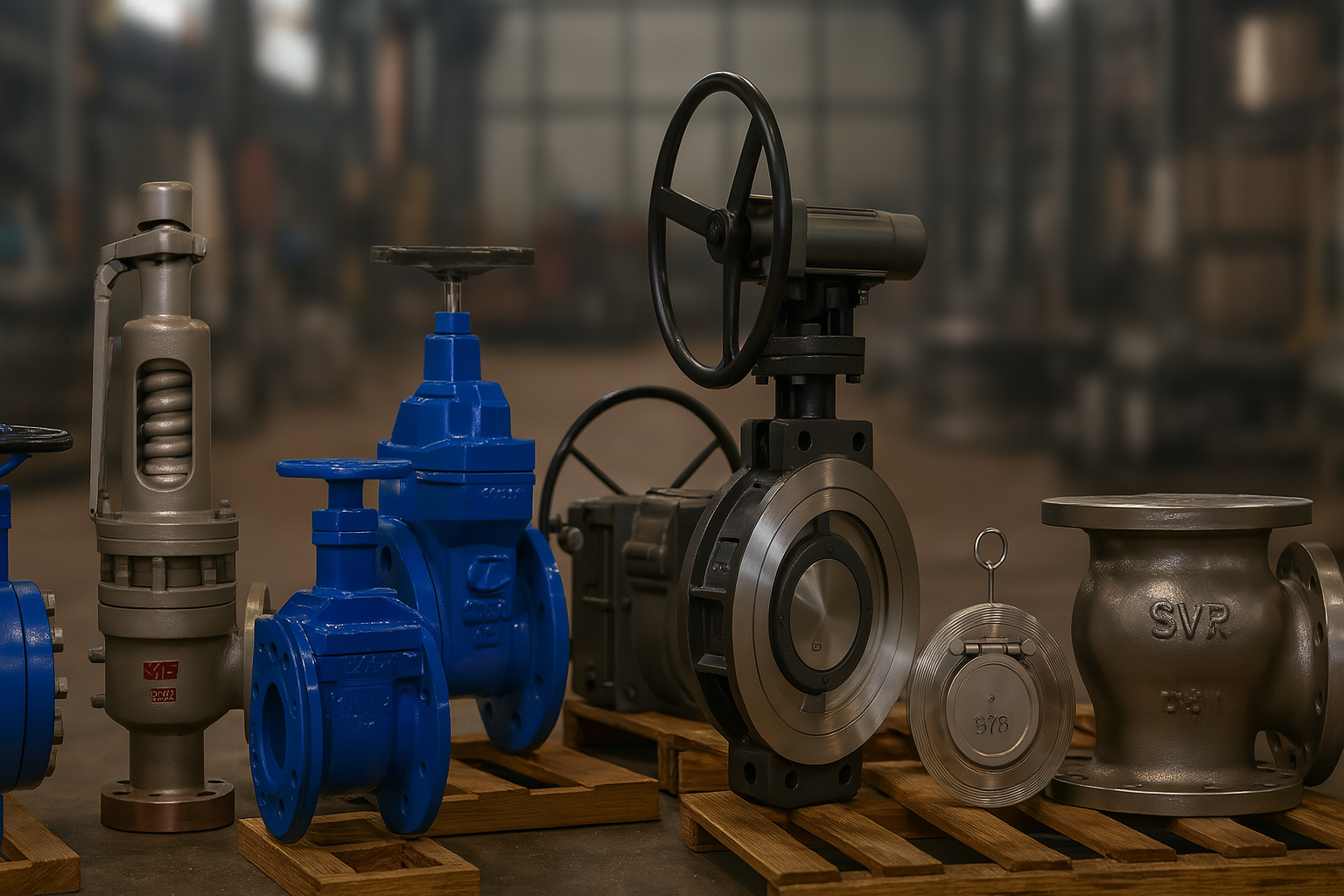
- Butterfly valves for desalination handle large-diameter sections on intake and pre-treatment lines where you need reliable isolation and flow control at moderate pressure ratings. Their compact build and fast actuation make them practical for frequent cycling. When comparing butterfly vs gate valve in water treatment, butterfly valves are the better fit for high-cycle duties and larger bore sizes, while gate valves suit lines that stay open or closed for long periods.
- Gate valves for pipeline isolation remain common in main transmission lines where full-bore flow and minimal pressure drop are required.
- Ball valves for water treatment are preferred where tight shutoff is critical, particularly in RO feed and permeate lines. On the question of ball valve vs plug valve for seawater systems, ball valves lead on sealing reliability and ease of maintenance.
- Check valves for backflow prevention protect pumps and membranes throughout the system from reverse flow damage at pump discharge points and membrane skid outlets.
- Control valves for flow regulation manage pressure across the high-pressure RO stage, typically paired with actuators for automated control.
Best Materials for Seawater Valves:
Valve material selection for high salinity water is where most specification errors occur. The process chemicals and chloride concentrations involved demand corrosion resistant valves built from proven alloys, not standard carbon steel or 304 stainless. Choosing the best valves for seawater systems means prioritising material grade first, then valve type.
- Super duplex valves are among the most specified grades for high-pressure desalination service, with strong resistance to pitting, crevice corrosion, and stress corrosion cracking. Grades such as UNS S32750 and S32760 are particularly suited to brine discharge systems.
- Duplex stainless steel valves offer a cost-effective balance of strength and corrosion resistance for RO skid components and general seawater service.
- SS316 valves for seawater are acceptable in lower-salinity treated water applications but need careful evaluation for direct seawater contact.
- Anti-corrosion valve materials such as titanium and Hastelloy cover niche areas like chemical dosing lines where standard grades fall short.
Duplex vs stainless steel valves for desalination is a common design-phase comparison. Duplex and super duplex grades consistently offer better lifecycle value, and knowing what is the best valve material for desalination projects ultimately comes down to the chloride concentration and pressure at each service point.
How to Select Valves for RO Systems:
This section serves as an RO plant valve selection guide for engineers and procurement teams. Valve material selection for high salinity water and pressure class are the two starting points. The table below outlines the key technical standards and parameters that govern industrial valves for water treatment in Bahrain.
| Technical Parameter | Requirement / Detail |
| Design Standards | Valve standards API and ASME: API 6D (pipeline valves), ASME B16.34 (pressure-temperature ratings) |
| Pressure Rating | Pressure rating for desalination valves varies by stage; RO feed service can exceed 70 bar |
| Valve Sealing | Valve sealing for saline water must be verified under actual service conditions |
| External Coating | Valve coating for corrosion protection: epoxy or fusion-bonded coatings for coastal environments |
| Material Certification | EN 10204 3.1 or 3.2 mill certificates; PMI testing standard for alloy grades |
Common Maintenance and Failure Concerns:
- Valve corrosion in seawater systems is the most frequent cause of unplanned maintenance.
- Scaling and erosion in valves, particularly in throttling service, degrade seating surfaces over time.
- Valve failure in desalination projects typically traces back to wrong material specification or valves operated outside their rated range.
- Maintenance issues in desalination valves are best managed through correct initial specification, periodic inspection, and working with a qualified industrial valve supplier in Bahrain who can provide full documentation and after-sales support.
Sourcing the Best Industrial Valves for Seawater Desalination Projects :
How to choose valves for desalination plants in Bahrain involves more than valve type selection. For teams looking to buy desalination valves in Bahrain, lead times, certifications, and technical support all factor into procurement. Best industrial valves for seawater desalination systems are correctly specified per process stage and backed by full material traceability. The water treatment valves Bahrain projects specify are increasingly held to international standards with local availability as a firm requirement.
Middle East Valve is an established desalination valve supplier Bahrain procurement teams and EPC contractors trust, and a recognised seawater valve supplier Bahrain projects have relied on for corrosion-resistant alloy valves. The company operates as a valve manufacturer for water treatment applications and a fully stocked industrial valve stockist Bahrain clients can source from with short lead times.
As an industrial valve supplier for desalination projects, they serve as a dependable EPC valve supplier Bahrain teams consistently turn to. As a leading source of industrial valves in Bahrain, the company covers the full range of valve supplier Bahrain for desalination needs. Teams sourcing Bahrain desalination plant valves will find Middle East Valve to be a recognised valve supplier for desalination projects Bahrain has relied on across government and private sector water infrastructure.
Why Duplex Valves Are Used in Seawater Systems:
Standard stainless steel grades break down in seawater. Duplex and super duplex hold up because their microstructure handles chloride attack in a way austenitic grades simply cannot.
Seawater is one of the most corrosive service environments a valve will see. Standard austenitic grades like 316 lose material integrity through chloride-induced pitting and crevice corrosion, often faster than maintenance cycles can catch. Why duplex valves are used in seawater systems comes down to their two-phase ferritic-austenitic structure, which blocks these failure mechanisms at a metallurgical level.
On top of that, duplex grades run at higher tensile strength than standard stainless, so you get better pressure ratings without adding wall thickness. For most seawater service points, duplex is the floor, not the premium option. Super duplex is specified where chloride concentrations are highest and pressures are most demanding, particularly in brine discharge and concentrate lines.
How to Prevent Corrosion in Desalination Valves:
Most corrosion failures trace back to a specification decision, not a maintenance gap. Fix it at the start, not after the damage is done.
The biggest mistake is treating corrosion as a maintenance problem when it is actually a selection problem. By the time pitting or crevice corrosion is visible, the valve is already compromised. How to prevent corrosion in desalination valves starts before the order is placed:
- Pick the right material grade for the actual chloride concentration and temperature at that service point, not a generic “stainless steel” call.
- Specify valve coating for corrosion protection on all external surfaces, coastal salt spray attacks the outside while the process attacks the inside.
- Match gasket materials to the process fluid. Incompatible gaskets are a common and avoidable failure point.
- Inspect packing glands and stem seals on a fixed schedule. These are the first places corrosion takes hold and the easiest to catch early.
Which Valve Is Best for Seawater and High-Pressure RO Service:
For what is the best valve for seawater RO feed service, ball valves in super duplex or duplex stainless steel are the standard call. For brine discharge, super duplex or titanium.
How to select valves for seawater applications is not a one-size answer. The service conditions at each point in the system drive the decision. For high-pressure RO feed lines, ball valves in super duplex or duplex stainless steel are the standard choice. They hold tight shutoff, keep pressure drop low, and handle the cycling that RO systems put valves through. Brine discharge is a different problem.
The fluid is more concentrated, more corrosive, and harder on materials, which is why super duplex or titanium is typically called for at that stage. Pressure class, flow rate, and exact fluid composition at each point all feed into the final specification. A valve that works well on the feed side can fail quickly if moved to brine service without a material change.