



Blog
Role of Automated Valve in Modern Industrial Facilities
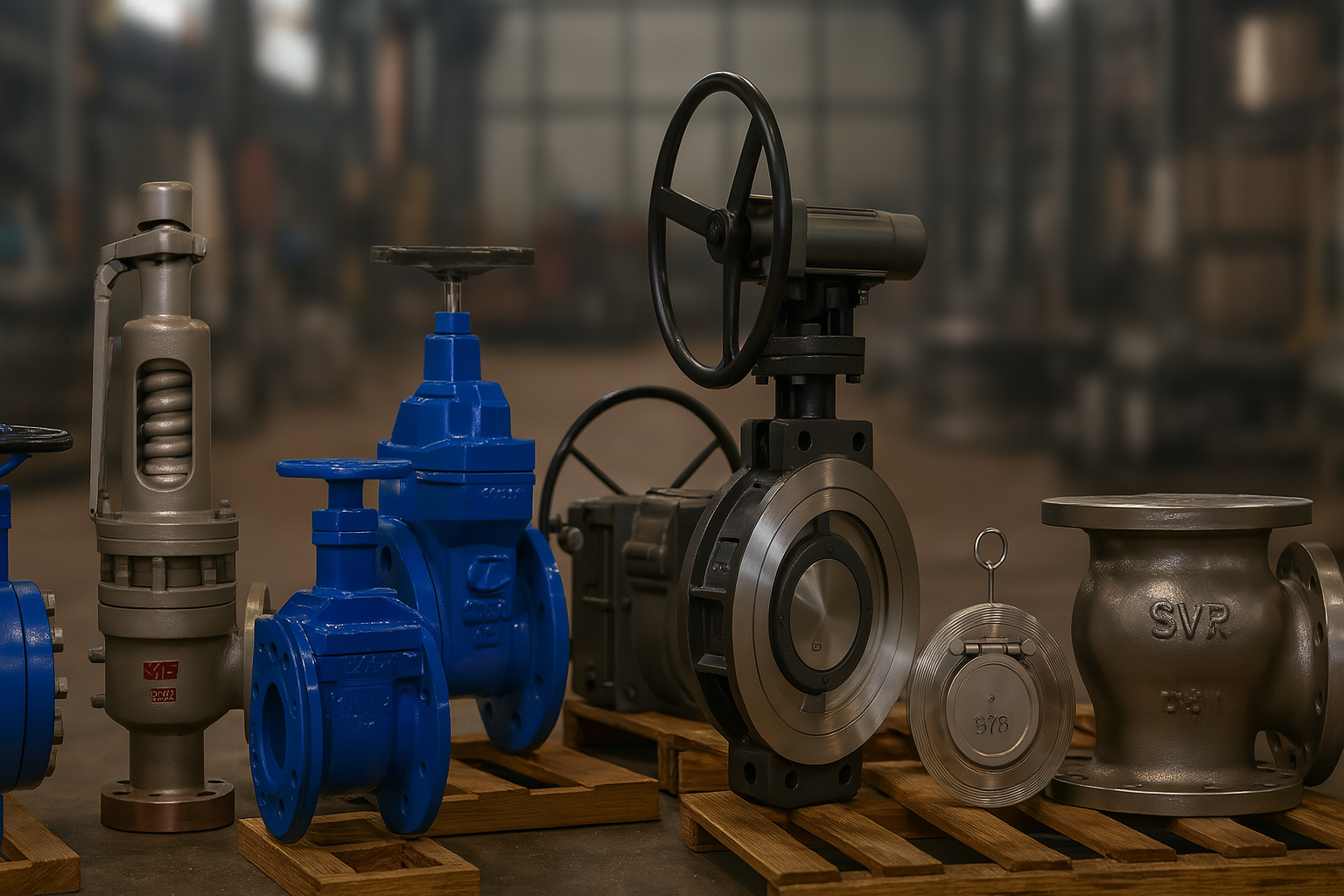
The current generation of industries in the Middle East has developed a system of operation, which will look very impressive even by today’s standards a few decades ago. Refineries are producing tens of thousands of barrels of oil daily. Water treatment plants provide uninterrupted services to millions of people. The power industry supplies energy on a consistent basis through the countrywide grid network. All these operations cannot be carried out without automation, and one of the most important components of the automation processes is the automatic valve system. Middle East Valve specializes in providing solutions in this area to all kinds of industries in the Middle East, and innovations continue to emerge in the field of automated valves.
The Anatomy of an Automated Valve Assembly
A pneumatic actuated valve includes the conventional valve body along with an actuator, which is used as the motive source for the opening or closing of the valve without any human intervention. The actuator is basically used as a medium through which energy source is converted into physical motion; pneumatic, electric, and hydraulic actuators are the most commonly used actuators.
A pneumatic actuator is most widely used for process plant applications due to the following reasons: Firstly, it offers high speeds as well as is highly simple to use; secondly, it can easily be operated in explosive environments owing to its explosion-proof design. In addition, the spring return pneumatic actuator offers a fail-safe feature in that it utilizes the stored spring energy for operating the valve at the safe position in case of any loss of air pressure or signal. On the other hand, solenoid valves are used for turning on and off the flow of air into the actuator based on digital input signals from the control system of the plant.
Control System Integration and Remote Operation
The true benefits of an automated valve come out once the valve is connected to the plant’s overall control system. An automated valve is integrated into the control system, which is either a distributed control system (DCS) or a programmable logic controller (PLC), controlling the whole plant operations by monitoring several hundred parameters while adjusting the valve position. For a straightforward open or close task, an on/off command is sent to the valve, followed by position confirmation as to whether the valve has been moved or not. In the case of modulating control valves, the continuous signal controls valve positions to certain degrees of opening to regulate the flow rate or pressure or temperature.
SCADA control systems enable remote control and operation of such plants as there is no need for personnel to manually operate the valve since it is controlled via computerized consoles situated in a separate room. Remote control systems can provide additional safety when working with offshore oil platforms, big gas-processing plants, or pipelines under high pressure.
Emergency Shut-Down Systems and Safety Integrity
Some of the most important applications of automatic valves in Middle Eastern industries include their use in emergency shut-down (ESD) systems. When the process safety logic determines that there is a need to close an ESD valve because there may be a hazard, the valve closes instantly, isolating a part of the process plant to contain the problem.
Safety levels associated with the performance of valve assemblies used in ESD systems are determined using SIL levels described in IEC 61508 and IEC 61511. To ensure a certain level of safety (a SIL level), it is not sufficient to have reliable actuators and valves. It is also essential to prepare detailed documentation for the process, including failure rate analysis, diagnostics, and proof testing procedures. The proof test can take place during partial stroke testing without shutting down the operation of a plant.
It is essential to consider fail-safe principles in ESD valve selection. Depending on the process hazards analysis, the design engineers decide whether the valve will be fail-open, fail-closed, or fail-last position.
Smart Positioners and Predictive Diagnostics
One of the major developments in the field of automation valves in the last ten years has been the development and implementation of intelligent digital positioners. In addition to just controlling position, such positioners feature microprocessors that analyze and assess the performance qualities of the whole assembly of which the valve forms an integral part.
Some of the key factors that are monitored in a valve using intelligent digital positioners include actuator supply pressure, time taken for stem travel, friction and hysteresis in the valve itself and the actuator, and difference between demanded and delivered positions. Trends in these key indicators signal the onset of particular problem areas in valves long before they cause any sort of malfunction in operations. A valve that takes progressively longer to travel may indicate the impending failure of the diaphragm in the actuator while one with increased friction may indicate problems with the packing.
Such monitoring enables maintenance activities to be performed on valves based on their current condition, as opposed to being planned in advance and regardless of the condition of the valve. This leads to lower costs incurred in maintenance activities, coupled with improved reliability of the equipment.
Electric Actuators and Digital Communication
The electric type of actuator has traditionally been considered an inferior alternative to its pneumatic counterpart on account of certain constraints regarding explosion-proof capability, as well as speed and fail-safe operation. With improvements made in terms of motor control circuitry, improved protection of components from harsh environmental conditions, and the availability of battery-operated safety circuits, many of these issues have been resolved, and electric actuators have become more common across industrial facilities in the Middle East.
State-of-the-art electric actuators are characterized by accurate positioning systems, data recording capabilities, and support of various fieldbus standards such as PROFIBUS, FOUNDATION Fieldbus, and Modbus TCP. The lack of requirements related to the presence of a distributed air compressor system represents a clear advantage in remote pipeline systems, as well as situations when building compressed air networks proves to be impractical and costly. Electric actuators with gearboxes are suitable solutions in the case of multi-turn valves including gate valves and rising-stem ball valves.
Energy Efficiency Through Automated Valve Control
The impact of automatic valves on the energy efficiency of the manufacturing facilities can hardly be overestimated. In the cooling water circuits, automatically operated butterfly valves allow controlling the flow rate through the heat exchangers based on real cooling needs rather than maintaining maximum possible constant flow rate, thus saving electricity for pumps operation and increasing their lifespan. In the air compressor stations, automatic isolation valves help shut off inactive parts of the system during low-demand periods, thus preventing leakage losses and reducing compressor workload.
In the steam systems, automatically regulated valves help maintain proper levels of pressure and temperature in downstream equipment and thereby ensure energy-efficient operation while protecting this equipment from the stresses related to excess pressure and temperatures. All in all, the overall energy savings associated with the use of automatic valves in a big manufacturing facility can be considerable.
The Path Forward: Connected and Intelligent Valve Systems
The future of automated valves is undoubtedly headed towards increased connectivity, intelligent functionality, and integration with IIoT platforms. The fields under development that would help improve the effectiveness of these valves are wireless connectivity, on-board storage, advanced machine-learning-based analytics, and digital twins.
Facilities operated by companies within the Middle Eastern region, where the complexity of the installations is growing, need to create an infrastructure of automated valves that would enable them to benefit from these features in the long term. It would allow them to become more competitive in terms of safety, efficiency, and cost management during the next decade. The facilities that would be the best performing in these fields in the coming years will be those equipped with a properly automated infrastructure of valves.
The automated valve is not only a remotely controlled device used to isolate a fluid flow, but rather a smart component playing its role within a comprehensive approach to safety assurance, energy efficiency optimization, predictive maintenance planning, and digitization of industrial processes. As ME industrial assets continue expanding and evolving in terms of complexity and scope, the need for automation technology is going to become more and more apparent. Industrial complexes that opt for automated valve technology carefully and considerate of future needs, choosing systems that allow seamless integration with other components and provide valuable diagnostic information, will be ahead of the game.
Be it an ESD system in a gas processing plant, a modulating control valve in water treatment facility, or an automated isolation valve in a district cooling complex – the idea stays the same. It is hard to overstate the importance of proper automated valve selection and maintenance – these components represent some of the highest value items in contemporary industrial facilities.